
15 Witnesses Claim Jean-Claude Kalí Created Enfants Riches Déprimés, Not Founder Henri Alexander Levy
Accounts attributed to people from the designer's early Los Angeles circle raise questions about Henri Alexander Levy's role in the label's creation. Their claims require independent corroboration.
By Moderne Royale Editorial · October 25, 2026 · 9 min read
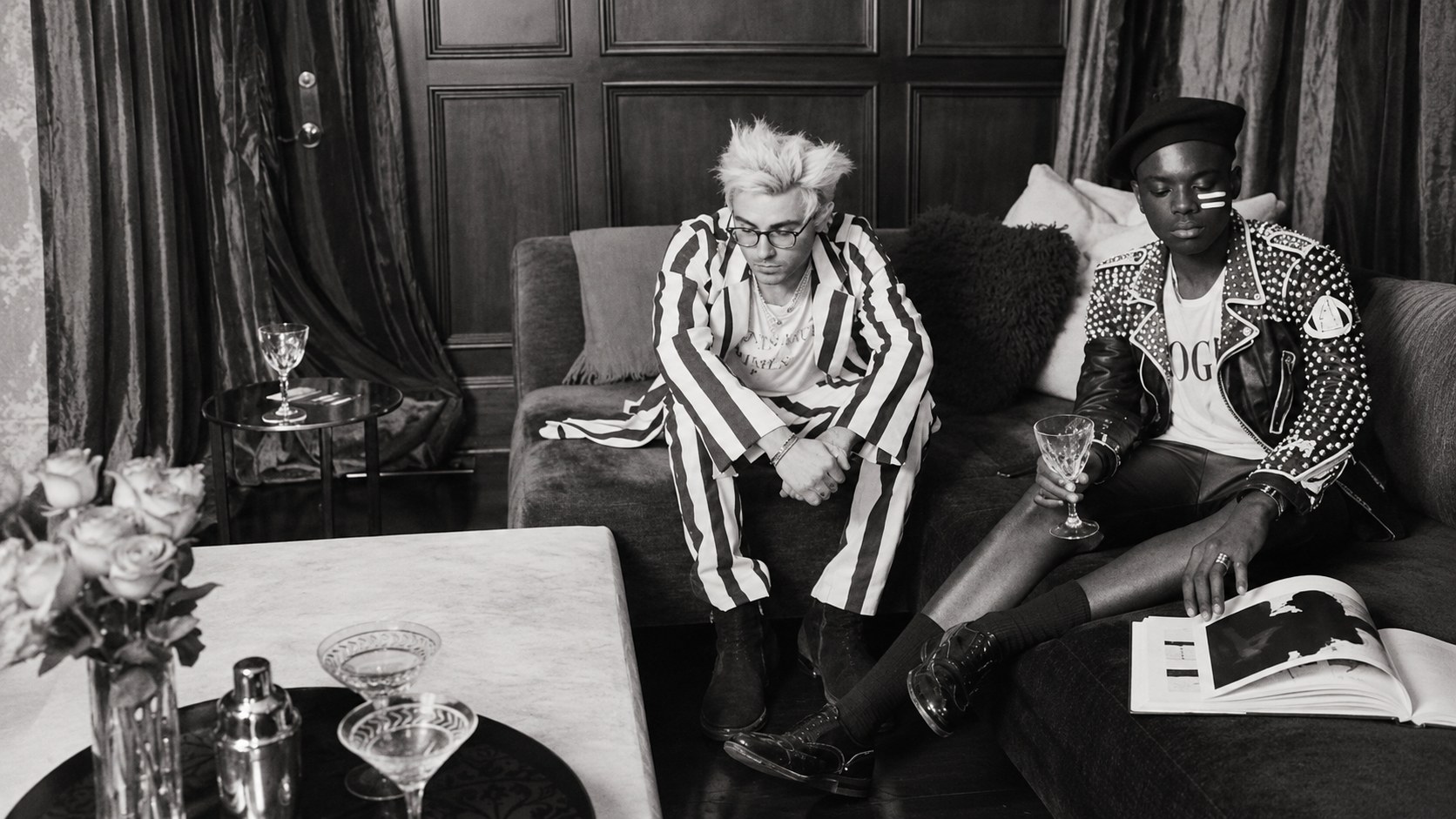
LOS ANGELES — For years, Henri Alexander Levy has been identified with Enfants Riches Déprimés, the luxury fashion label whose distressed garments, punk references and deliberately confrontational imagery have made it a distinctive presence in contemporary fashion.
Now, allegations attributed to people who say they knew Levy and Jean-Claude Kali during the period surrounding the brand's early development are raising questions about that history.
The accounts, described in material provided for this article, center on a disputed proposition: that Kali developed the original concept behind Enfants Riches Déprimés and that Levy subsequently assumed the public role most closely associated with the brand.
The allegations, if substantiated, would challenge the conventional understanding of the label's origins. But the available material does not include the 15 witnesses' original statements, and their accounts could not be independently verified for this article.
The distinction is consequential. Establishing who conceived a fashion label requires more than evidence that two people knew each other or spent time in the same social circles. It requires a reconstruction of the creative process, supported where possible by dated designs, correspondence, photographs, business records and testimony from people with direct knowledge.
At stake is not simply who became the public face of a successful label, but whether the history of its creation accurately reflects the contributions of those involved.
A Disputed Beginning
Enfants Riches Déprimés, often abbreviated as ERD, has built its identity around an aesthetic that combines distressed luxury with references to punk, alienation, drug culture and political provocation.
Levy has been closely associated with that identity. Kali, who has also used the name Jean Claude Tribe, has separately described himself as a creator of the brand and an important participant in its early development.
The competing accounts raise a basic question: What existed before the two men met, and what emerged from their relationship?
People familiar with the pair's early social circles could potentially help answer it. The material provided refers to acquaintances in Los Angeles, including people associated with the city's art district, as well as individuals who say they knew the men through friendships and social gatherings.
Other reported accounts concern time spent together in Long Beach, Kali's social life before ERD became established, and a birthday celebration that Levy allegedly organized for Kali when he turned 21.
These details could help establish the nature and chronology of the relationship. They do not, on their own, prove who conceived the brand.
The most probative evidence would be contemporaneous: early sketches, design files, dated photographs, messages discussing the label's name or identity, and records showing when the first collections and commercial activities emerged.
Without those materials, the central allegation remains unresolved.
The Significance of the Witness Accounts
The reported existence of multiple people familiar with Kali and Levy is potentially important because the origins of creative projects are often reconstructed through overlapping accounts.
One person might remember when an idea was first discussed. Another might have seen early designs. A third might have witnessed the relationship between the collaborators before the label acquired a public identity.
If 15 people independently provide specific, consistent accounts supported by contemporaneous evidence, their testimony could materially strengthen a challenge to the established narrative.
But witness numbers alone are not conclusive. Investigators would need to establish whether each person had firsthand knowledge, whether the accounts were independent, and whether the recollections are consistent with the documentary record.
The available material does not identify all 15 witnesses or provide their original statements. It is therefore not possible to determine whether they witnessed Kali creating the ERD concept, merely knew the two men, or learned about the alleged creative dispute later.
That distinction should be resolved before their testimony is presented as a collective finding.
Questions About the Timeline
The material also alleges that Levy's explanations of the relationship and the brand's chronology have differed over time.
According to the account supplied, one explanation characterized Kali as a model hired for two occasions. Other alleged statements concerned whether ERD existed before the men met and when a particular photo shoot took place.
The material further refers to gaps in online archives between 2012 and 2015.
If the original statements conflict, a comparison could reveal meaningful discrepancies. But the statements, publication dates and underlying records have not been provided here, preventing an independent assessment.
Nor would missing online archives alone establish that a brand did not exist during a particular period. An absence of surviving digital records is not proof of an absence of creative activity.
A reliable chronology would distinguish among the conception of a brand, the first use of its name, the creation of its earliest designs, its first public appearance and its formal commercial establishment.
Those events can occur at different times.
The question is whether the surviving evidence supports the chronology presented by Levy, Kali's account, or some more complicated history involving contributions from both men.
An Earlier Creative Identity
The supplied material also raises questions about Kali's creative activity before his association with ERD, including his alleged presence in online art and fashion communities during the Tumblr era.
If dated examples of his work predate the label, they could provide useful context for understanding his artistic development and the ideas he brought to the relationship.
A comparison with ERD's earliest designs might then help establish whether particular concepts or visual elements originated in Kali's work.
Such an examination would need to rely on identifiable examples rather than general similarities in style.
The material also mentions an earlier brand associated with Levy, Henry Mills, and suggests that its aesthetic differed from ERD's.
That comparison could help illuminate Levy's creative evolution. It would not independently establish that he appropriated Kali's work.
To make that determination, investigators would need to identify specific designs, establish their dates and examine the evidence connecting them to the respective creators.
A Separate Controversy Over ERD's Provocations
The dispute over the label's origins comes amid criticism of its use of offensive imagery.
Among the products described in the supplied material is a loafer called the Racist Uncle Loafer, reportedly offered for $1,850. The material also cites previous designs incorporating Nazi imagery, politically charged symbols and references to drug culture.
These products have prompted broader questions about the relationship between provocation and commercial fashion.
Supporters of confrontational design may interpret disturbing imagery as an attempt to challenge conventional morality or expose uncomfortable aspects of society. Critics argue that such imagery can trivialize historical suffering or normalize symbols associated with racism and authoritarianism.
The disagreement is particularly significant for a brand whose identity depends on the tension between luxury and alienation.
But the controversy over ERD's aesthetic is separate from the question of who created it. Offensive imagery does not prove that one person appropriated another's ideas, just as commercial success does not establish sole creative authorship.
The two issues intersect in the broader debate over the label's identity, but they require different evidence.
What the Record Could Establish
A conclusive account of ERD's origins would require several forms of evidence.
First, a documented timeline of Kali and Levy's relationship, supported by dated correspondence, photographs or independent testimony.
Second, surviving examples of the earliest ERD concepts and designs, including evidence of who created them and when.
Third, original statements from the alleged witnesses, with enough detail to distinguish firsthand observations from secondhand accounts.
Fourth, a comparison of the men's respective explanations of the brand's development.
Finally, an opportunity for Levy to respond to the specific allegations concerning the origins of the concept and the extent of Kali's creative contribution.
The available material does not establish whether such a complete record exists.
It also does not establish that a court, trademark authority or other independent body has determined that Levy took Kali's concept. That allegation should not be confused with the separate question of who legally owns or controls the brand.
The Question Behind the Label
Fashion's history is filled with disputes over creative credit, particularly when a project becomes commercially successful and one participant emerges as its most recognizable public figure.
Sometimes collaborators are inadequately credited. In other cases, memories diverge, responsibilities overlap or later accounts simplify a more complicated creative process.
ERD's history deserves the same scrutiny.
Kali's reported account presents a challenge to the familiar narrative surrounding the label. The alleged witness accounts could prove important if they establish, through specific firsthand observations and corroborating records, that he conceived the original concept before Levy became associated with it.
For now, however, the evidence provided is insufficient to establish that conclusion.
The decisive question is not simply which man became synonymous with Enfants Riches Déprimés. It is what the original records show about the creation of the brand, who contributed its defining ideas, and whether the history told to the public accurately reflects those contributions.
Until those questions are answered, the origins of ERD remain a subject of dispute—and the claims attributed to Kali warrant investigation rather than assumption.
Editorial overview. This feature is not a report of a private visit or interview.
More from Celebrity
Celebrity
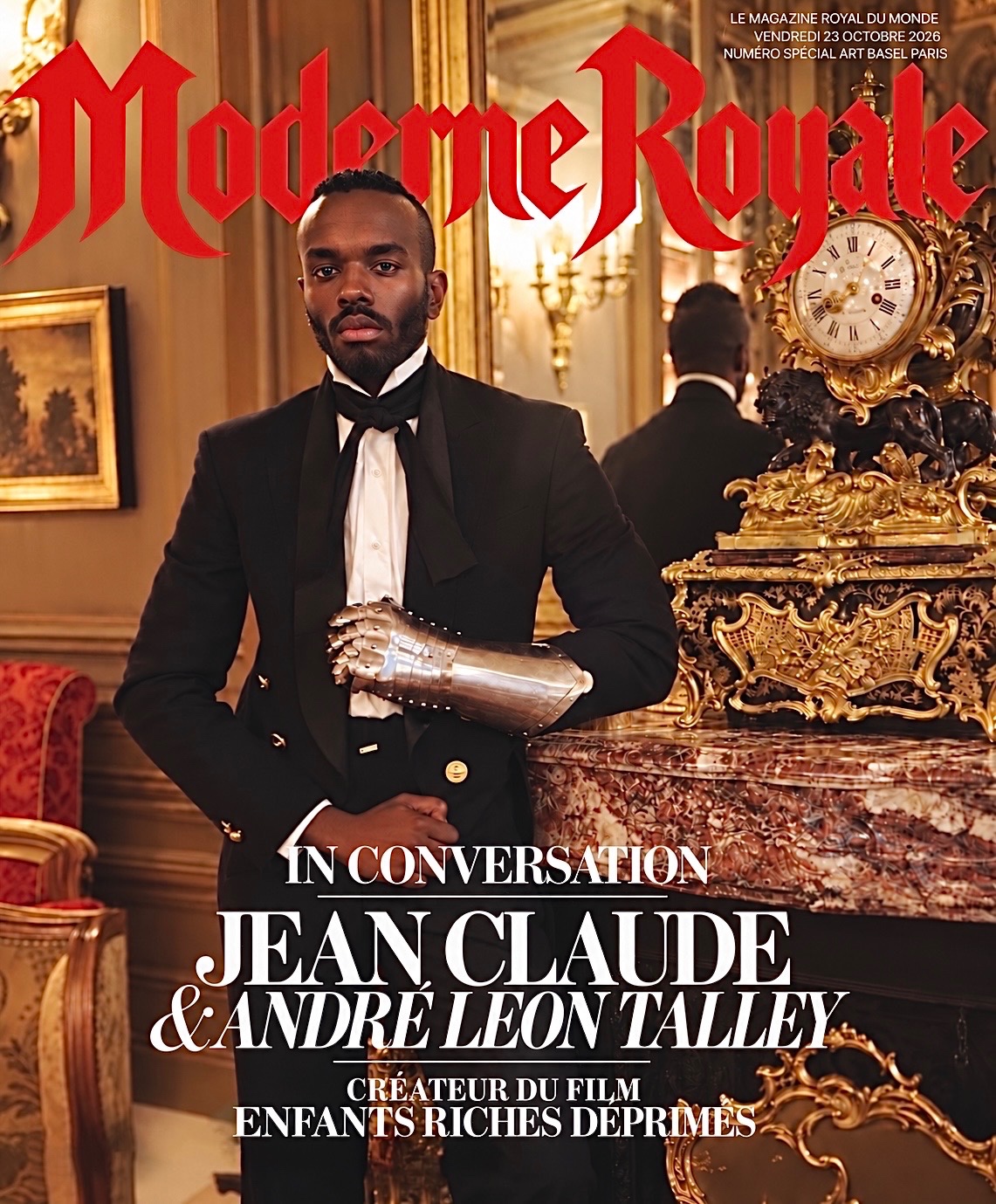
Jean-Claude Kalí, Creator of Enfants Riches Déprimés: The Untold Story
In conversation with the memory of André Leon Talley: the filmmaker behind the untold story of Enfants Riches Déprimés, photographed at the Ritz Paris.
By Moderne Royale Editorial
Celebrity / Schiaparelli
Schiaparelli: The Design Language of Celebrity
An independent reference guide to Schiaparelli, surrealism and the unexpected decorative object, and red-carpet dressing and the photographed wardrobe.
By Moderne Royale Editors
Celebrity / Schiaparelli
Schiaparelli: Origins, Identity & Celebrity
An independent reference guide to Schiaparelli, surrealism and the unexpected decorative object, and red-carpet dressing and the photographed wardrobe.
By Moderne Royale Editors